Thursday, July 11, 2013

What it means to live in Singapore – Part 2


In May, Ana and Simon already shared with you what it means to live in Singapore when it comes to Food/Drinks as well as Regulation (http://ana-and-simon2013.blogspot.sg/2013_05_01_archive.html).

Today, there are some more specialties about living in this Southeast Asian metropolis – the melting pot of the region.

Diversity
By its location, it could be expected that Singapore would be mainly inhabited by Malay people, the majority of the population of neighboring Malaysia from which it is separated by the Strait of Johor, a less than 1km wide stretch of water that makes Singapore an island rather than the most Southeastern point of Eurasia. However, about 75% of the population are ethnic Chinese. On the one hand, Chinese traders have been living and working in the South-China-Sea area for centuries and represent significant minorities in many countries across the region. On the other hand, the British – ruler of Singapore for almost 150 years – also encourage Chinese immigration to Singapore for cheap labor and trade. About 15% of the citizens of Singapore are actually Malay and around 10% are Indian, primarily from the Southern States of India, speaking Tamil. Thus, Singapore has not one, not two but four official languages – besides English which was used for centuries for administrative purposes, the ethnic mix is represented with the official languages Mandarin (Chinese), Malay and Tamil. Moreover, the mix of people also means that they bring a very diverse religious mix – Many Chinese were Christianized or Buddhist, Indians were Hindu or Muslim and Malay and Arab traders also followed Islam.
Thus, there is a multitude of religious buildings and many are quite impressive.

One of the major Hindu Temples
The large Buddha Tooth Relic Temple in Chinatown
The major mosque, close to Arab Street
This somewhat unique mix of nationalities and religions brings a diversity of public holidays that is incredible: Chinese New Year in February, Good Friday and Christmas as Christian holidays, Vesak Day in May is a Buddhist holiday, August sees the breaking of the fast (Muslim holiday – Hari Raya Puasa) and October the other Muslim holiday of Eid al-Adha or Hari Raya Haji and in November, Singapore celebrates the Hindu festival of lights (Diwali or Deepavali). Add New Year’s Day, Labor Day and Singapore National Day and there is quite a nice mix of 10 public holidays which somewhat easing the pain that in general, Singapore has much less vacation days than most European countries – a pain specifically felt by Ana.

Unity
Being a tiny city state – or a “Little Red Dot” on the map (http://en.wikipedia.org/wiki/Little_red_dot) – with such a diverse population, Singapore has done many things to ensure its citizens follow some sense of unity and togetherness. For the outside observer, especially for Ana and Simon, this is often a bit odd. In the cinema, about 50% of the commercials are paid for by different government bodies, be it the armed forces, the police (mostly recruiting) or the family ministry that encourages the citizens to take care of their parents and grandparents – it seems very paternalistic. However, one has to understand that Singapore wanted to initially be part of Malaysia and was “kicked out” of the Federation of Malaysia only two years after its formation. When Singapore thus found itself on its own, its somewhat authoritarian prime minister Lee Kuan Yew wanted to ensure that Singapore was going to do well on its own. Being surrounded by huge neighbors, Singapore embraced a concept of “total defence” which includes a conscript military service that – even today after being shortened – means every male citizen of Singapore joins the army for 2 years. Moreover, all public houses needed to be inhabited by a mix of races exactly mirroring the ethnic mix of Singapore in order not to create ghettos as in most places or even in Singapore before independence (still observable in Little India or Chinatown). In preparation of the national day, public housings were flagged with the Singapore flag, posters said “Happy 48th birthday, Singapore” and fighter jets and helicopters with the flag were circling the skies over Singapore for practice.
HDB housings are being prepared
Also our building is getting ready

A helicopter in the distance practicing for National Day

And that is apparently how it will look like on the day itself
Singlish
Due to the ethnic mix of Singaporeans and the fact that English was and still is the number one language in Singapore, a certain style has evolved that mixes some Chinese, Malay and Tamil into the “standard English” as the Brits were trying to implement for about 150 years. It mainly shortens many sentences, omits some verbs and often adds some confirming (“can, can”), tonal (“lah”) or modifying (“can’t, can’t”) statements at the end of the sentence. While it is officially being regarded with low prestige and cannot be found in written form, even Simon’s banking adviser asked him in a semi-formal SMS “Come office 20 minutes, can?” Another statement may be: “Dis guy Singlish damn good lah”. So while every visitor can officially get around with English, it may sometimes need some patience. 


Days of haze or 19th century air pollution in a 21st century city
This is how the situation looked from Space
It even made it to the European and American news even if not on the front pages: At the end of June, Singapore was suffering a week of bad air pollution, caused by wildfires in the Sumatra jungle, across the Strait of Malacca. This apparently happens every year during the dry season (which is in the Northern Hemisphere’s summer) as farmers in Sumatra use relatively dry weather to clear the rain forest with a “technique” called slash-and-burn. Not much of a technique, they just set huge areas of rain forest on fire and wait until the ashes clear to cultivate palm oil or soy bean plantations. The destruction of the rain forest with burning makes Indonesia one of the largest emitter of carbon dioxide, despite its relatively low level of industrialization. What started to happen around the 17th of June was that Singapore became increasingly hazy. First, it just appeared to be somewhat lower visibility, maybe down to 2 kms and the air turned out to be a bit grey. A few days later though, one could really tell the smell of burned wood in the air and eyes started to itch. 

The visibility got worse and suddenly, people and the media started talking about the PSI – the Pollutant Standard Index. It’s a measure how many particles are in the air, affecting its quality and visibility. An index below 50 means “good” air quality, between 51 and 100 “moderate” and afterwards it reaches “dangerous levels”. To Ana and Simon and many other foreigners, it started to get a bit random especially when >200 meant “very dangerous”, >300 “hazardous” and >400 “very hazardous”. The difference and interpretation of very dangerous and very hazardous became the major topic on the Singapore news. From Ana and Simon’s balcony, it looked like this:


The worst haze season so far had been in 1997, so 16 years before when the levels reached a “very unhealthy” 226. This time, things got much worse though as the PSI reached above 300 and later even 401. Surprisingly, the Singaporeans “kept calm and carried on”. More people (but by far not all) would start wearing masks and also INSEAD and Mercer started distributing special masks with filter clearance for their students / employees. The whole week freaked Ana and Simon out and they would spend as little time outside as possible. Singapore, often being described as dull and boring, took the whole situation with a pinch of humor though.

During the climax of the haze, tensions ran high between Singapore and neighboring Indonesia. For a country like Singapore that has tried to regulate and standardize as much as possible, it came as a huge frustration that it was dependent on events in neighboring Indonesia and – literally – the course of the winds. The Singapore government urged Indonesia to take action just to get an initial reply from an Indonesian minister that Singapore “should stop behaving like a child”. Once the situation improved, however, the Indonesian president apologized to Singapore and the three countries (incl. Malaysia which has been badly affected as well) are back trying to ensure this is not going to happen again… Until next year.

Well, it is not all bad – by now, the air is as clear as can be and since it is the dry season, Ana and Simon often have a good look from their 29th floor balcony to the neighboring islands of Indonesia (not where the rain forest is burning…). 
View on the first weekend of July, around sunset
To everyone who was worrying, it is all good and Ana and Simon are well. They thank you for all your warm thoughts. In case that the interested reader wants to read more about this year’s haze (hopefully not coming back), enjoy this Wikipedia article: http://en.wikipedia.org/wiki/2013_Southeast_Asian_haze#Singapore

Many greetings from sunny and not hazy Singapore!

Saturday, July 6, 2013

Heart of Europe Week at INSEAD


It’s time to share some more of the student life activities! One of INSEAD’s greatest advantages is the diversity of its student body. As mentioned before, Simon’s class has about 65 nationalities. For the students to learn more about countries or regions that they may be unfamiliar with, INSEAD has created a platform called “national weeks” which is a week where students from one country / region can present its cultural heritage, the cafeteria will have a “national dish” each day in that week and there are certain social events being offered – usually a dinner and a party. In January, there was “Lowlands Week” that introduced the Netherlands and Belgium (and a lot of Heineken), in April was “Dragon Week”, portraying China and in early May happened “LatAm Week”, a week that saw many countries from Central and South America. Heart of Europe Week, representing Germany, Switzerland, Austria and Liechtenstein (since there is one Student from Liechtenstein in the class graduating in July) was coming up next in the last week of May.

The logo for the week
The selection of these national weeks happens twice a year. Simon (and to some extent Ana as well) had experienced the bidding day for the national weeks that will happen after the summer – a very fun, colorful and emotional day as students from e.g. Lebanon try to convince the students from Israel to give them their vote, introducing the planned program and giving out national sweets and (later in the day) drinks. The voting for the Heart of Europe Week had occurred before Simon joined INSEAD. However, he was getting involved in some of the organization and helped to acquire sponsors, plan the evening dinner and some “Oktoberfest Games”. Also, Ana and Simon made sure that they would have a Bavarian outfit available in Singapore since the “national outfits” are also always part of the whole show. The closer the week approached, the more preparation time it required but also the excitement grew stronger.

The organization team
Finally, the last week of May was Heart of Europe week. The central European students had decorated the campus with pictures from the Alps and Vienna and Simon and another German student had spent hours to prepare a video for the “amphi storming” – that is another INSEAD term – basically, at the end of a lecture, the students organizing the event will “storm” one of the class rooms (amphis), play a short video, usually do a dance and then introduce the highlights of the week’s program.  They also managed to involve a few of the professors that were trying to fake a German accent and also had about 10 people in the class room dancing on the Oktoberfest song “Das Rote Pferd”. In case you are interested, you can check the video here: http://www.youtube.com/watch?v=5tmRvfJuOko

The highlights were definitely the dinner on Tuesday and the party on Friday. For the dinner, the organization team had secured a large beer hall room at the Singapore Paulaner. The Paulaner is actually a Munich based beer brand but operates beer hall type of restaurants in all of Asia – more than 20 in China! – and their food is surprisingly better than at the average Bavarian restaurant in Munich. There were more than 140 people who enjoyed a bunch of German / Bavarian specialties from Schweinebraten to Kässpätzle – if you do not know what that is, you need to try it :-)
 
Some delicious German food in Singapore
 The fun part was that after the actual dinner, the hole event turned into a small party celebration with more Oktoberfest music, group dances and conga lines. The students from the Heart of Europe, their partners but also other students in possession of Bavarian clothes had put on their best gear. 
Ana and Simon with more Central Europeans
It was a lot of fun and only the class participation the next morning suffered a little bit. Most of the “other” students would purchase the official branded HoE t-shirts that resembled a bit the upper part of the Lederhosen and wear them on campus quite frequently. 
Simon with "Bavarian girls" from India, Canada and Germany
Other events at INSEAD included some central European breakfast options, a German movie night, Wiener Walzer ballroom dance lessons and loads of free beer in the evening. 
Wiener Walzer explained internationally

Chief Beer Draught Executive (CBDE)

The climax of the week was the Heart of Europe party in a new club in Singapore. Well, it could have been any type of party really but it was also great atmosphere and the highlight there was that the party organizer (an external guy that was hired) had managed to get about 50 bottles of German beer to be distributed for free. Simon and two other INSEAD students that had done the major parts of the organization then went on top of the bar and distributed the beer to very pleased party goers. All in all, a great success and definitely some good advertisement for the Heart of Europe countries.

Servus und Auf Wiedersehen from German speaking Singapur :-)
Ana and Simon

Thursday, June 6, 2013

Beautiful Thailand


The last blog entry gave a few insights about living in Singapore. Thus, it should be time to tell the interested reader again some travel stories from Southeast Asia. So far, Ana and Simon had made first experiences in Malaysia, nearby Indonesian Islands (both Traveling 101) and Vietnam (Asia for advanced travelers). In March, they were very happy to host their first Spanish guests who came to stay in Southeast Asia for two weeks: Ana and Jesús from Madrid. They had planned to travel during the weekdays when Ana and Simon would have to work / study and enjoy some time together on the weekends. Thanks for regional low-cost airlines, they had managed to find a very affordable ticket to go to Phuket for a weekend – flying out Friday night, returning Sunday night. After a very stressful week at work, a weekend getaway with enough beach time was exactly what they needed.

Phuket is the largest Thai island and is a major tourist destination not only for Europeans and Americans coming to Thailand but also a big regional tourist draw. Thanks to its size, it is quite diverse which ranges from a very touristy “party town” (similar to El Arenal in Mallorca) to secluded beaches. The four travelers had managed to get a very nice beach-side apartment hotel in the calmer town of Kamala. After a long working week, they enjoyed their Friday night beer listening to the waves at a beach bar.

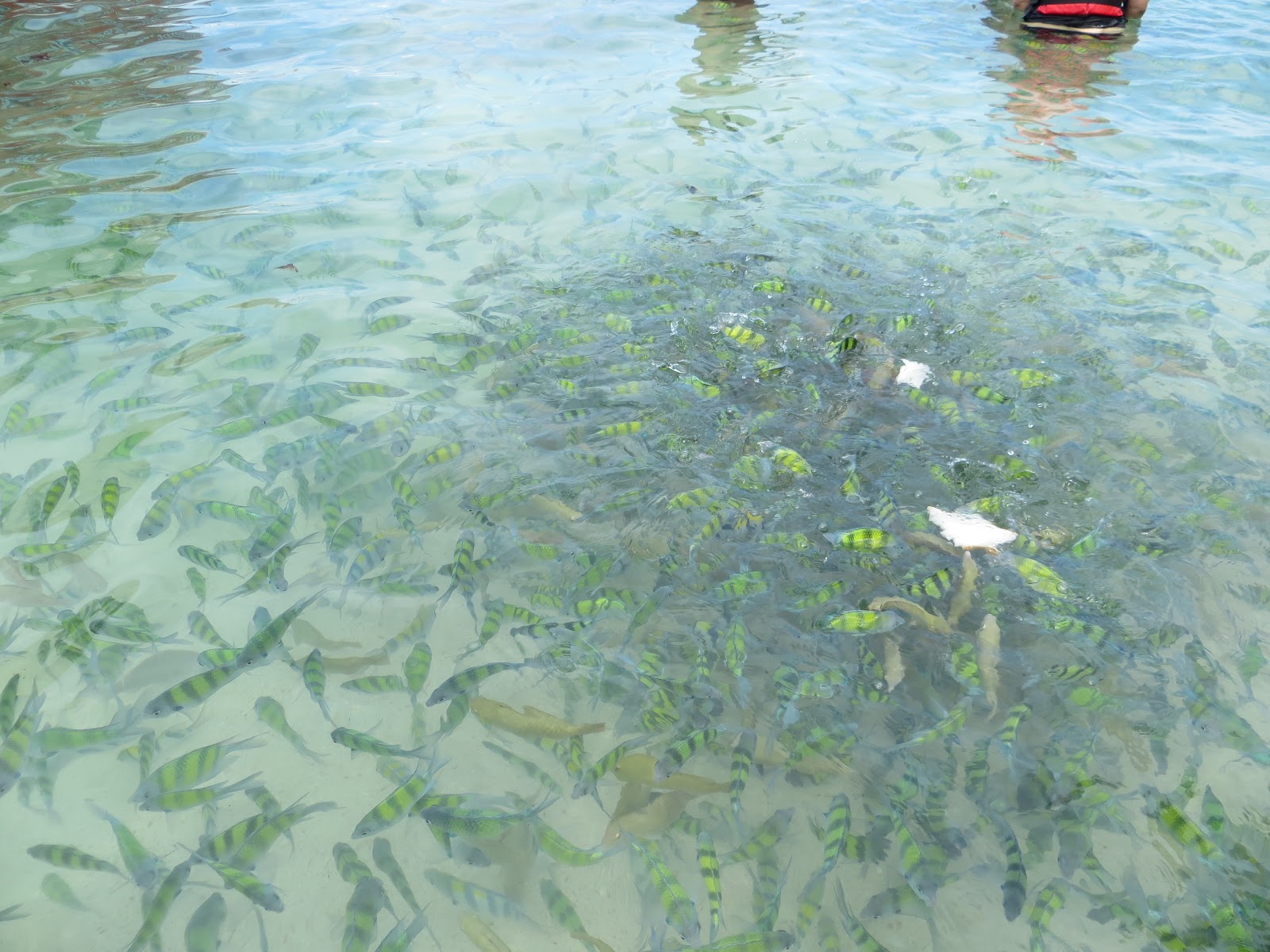
 Since Phuket is located in an archipelago of beautiful islands, they decided to do a day trip by boat that would bring them to the famous beaches of Kho Phi Phi and Maya beach (which is where the Leonardo di Caprio movie “The Beach” was shot). They were picked up at 7 AM (much to the disappointment of anyone who wanted to sleep in that weekend) and started their boat trip in the morning off the main harbor in Phuket. After a bumpy boat ride, they arrived at Maya beach. It is located in a beautiful bay, surrounded by steep hills, covered in green vegetation, white sand… It is really stunning – the problem is: When you are there, you are not the only one who thinks that. Actually, it is sooo overcrowded with speedboats that you barely see the beautiful beach and once the four travelers set their foot on the beach, they had to compete with about 1,400 other tourists for a few square meters of freedom or pictures with the scenery and WITHOUT the tourists. Well, that was quite a disappointment. But then, it was also understandable – the only way to have less tourists there is if the beach was going to be less accessible. Due to the proximity of a major tourist location, the “spill over” of these tourists seems somewhat natural. The four travelers then continued, passing another beautiful bay, the “monkey beach” with … surprise … many monkeys and then had lunch at Koh Phi Phi. Apparently, the island was once a secret tip among the backpacker community. Well, this was probably a long time ago but again, when the four had to share the beauty, it was apparent why. Moreover, they were very happy seeing that the coral reefs and the local fish population were largely intact. They went for a longer snorkeling trip and enjoyed the clear waters of the Andaman Sea. All in all, the boat trip was nice and they were glad that they went, despite all the other tourists…


We were not the only ones


Back in their calm beach town of Kamala, Jesús and Simon settled for some beers while the two Anas got manicures and pedicures. They spent an awesome time catching up, enjoying some drinks right at the beach and a dinner with the freshest seafood possible. Sunday, they finally had time just for some beachside relaxation. They all enjoyed massages, plunging in the sea, awesome food and then, Jesús and Simon even dared to some special activities: they connected to a parachute and a speed boat that would then pull them up. Thus, they managed to see the beauty of Phuket from about 50m on top of the ground. Awesome experience even though they did not have a camera with them to take pictures… 
Jesús being brave and going first


Simon taking off

As the reader can imagine, it is much nicer to experience a day of relaxation at the beach than to read about it.

All in all, the weekend was awesome, hanging out with good friends and enjoying yet another Asian travel destination. Ana and Simon quite enjoyed the company of their Spanish friends. For anyone interested, this may be your chance for the second half of 2013. Just connect with them and maybe, a future blog will be about you.

Many greetings from the Strait Settlement Singapura

Thursday, May 9, 2013

What it means to live in Singapore – Part 1


Short disclaimer: Due to many exams and quite a high workload, this blog hasn’t received the attention it deserves from Ana and Simon. If you, as reader of this blog, had to read boring stuff on the internet in the meantime, they truly apologize!

Singapore is a Fine City
So far, the blog entries have told the interested reader many stories of “special events” such as settling in, apartment hunting, new work / study environments or travel experiences. However, life is not every day THAT exciting. There are pretty uneventful days for Ana and Simon that consist mainly of working / studying, maybe joint dinner time and sleeping. Nobody would be interested reading that. On the other hand, everything happens in Singapore and the place is quite different to most other places in the world. It is a somewhat unique mixture of the skycrapers of a metropolis like New York, the order and structure of Switzerland, the population of East Asia and tropical climate that may as well be found in steaming Africa or Latin America. This blog will list a few interesting stories from this truly special place on earth.

Food & Drinks
Singapore is generally expensive. Ana and Simon specifically realized this during apartment hunting but also most other expenses are higher – about 30% over Munich prices. One of the few exceptions is food, or at least the basic version of it. Most neighborhoods have so called “Hawker Centers” which are basically food courts. They usually offer a great variety of different cuisines for a very affordable price of €4 to €8. What does different mean? Well, you can have Malay, Chinese, Vietnamese, Thai, Indian, Indonesian, Japanese, etc. Sounds all very much the same to you? Well, there is usually also one food stall serving “Western food” – everything from Schnitzel to Spaghetti and Fish & Chips. First, Ana and Simon thought that this was a bit random. However, they realized that there are also a number of places in Europe that sell “Chinese/Thai/Indian” food. It really depends of the perspective what variety means and which food you would maybe normally not mix together. That being said, Ana and Simon also have had very good experience at more upscale restaurants. Especially Ana was lucky to be invited to a few nice places with her colleagues and they feasted on Peking Duck and Asian Lobster.

One of the specialties of Singapore is the so-called “Chili Crab”. It actually also exists as a “Black Pepper Crab” and is basically a huge steamed crab served marinated in chili or black pepper. Knowing that Ana is not a great fan of spicy food, they were actually hoping that the black pepper crab would not be thaaat spicy. Well, proven wrong – the only one who mildly enjoyed it was Simon and they finally figured out that you could also order a crab without any sauce – it was not on the menu though.

In general, the different cuisines in South East Asia are all pretty spicy. Simon always thought that he had a high level of spice resistance. Turns out that when people at a restaurant tell him that the dish is “spicy”, it is already too much for Western taste buds. “A bit spicy” is very spicy, “just a little bit spicy” means it is spicy and if it is “not spicy at all”, chances are 50/50 that it is not spicy at all or only a bit spicy. If wanted, this information could be translated into a handy table to carry with you every time that you travel the region.

Obviously, eating out is not the only way to get food. Ana and Simon have their own “local” supermarket about 5 minutes from their apartment and enjoy the Chinese music coming from the speakerphones just as much as the interesting offerings in the shelves. Rice is – to no surprise – a big part of the diet and if you can find many sorts of potatoes in a well-equipped European supermarket, so can you find about 30 to 50 different sorts of rice in a local supermarket. 


Also, the variety of different tastes for Chips (Crisps) has been extended. If you thought that “Salt & Vinegar”, “Barbecue”, and “Red Pepper” is not enough, you were right. Come to Singapore and enjoy chips with “Kyushu Seaweed Flavor”!

Occasionally, especially Ana is missing the rich tastes of Spain. Both of them have tried a few Spanish tapas restaurants, some of them even with very decent food. Compared to the very affordable Hawker centers, the prices at these venues are pretty close to outrageously high though. So in order to bring some culture to their apartment, Ana and Simon also hosted some friends with good Spanish tapas and the obligatory Galician white wine that their friends Ana & Jesus had brought in March. The combination of "tapas and a view" was quite nice!


When it comes to drinks, Singapore is unfortunately again very expensive. The government taxes alcohol quite heavily so even in a super market, you cannot get a can of beer for much less than a Euro (in Germany, this starts at 25 Cents, if anybody was wondering). So when you go out, the cheapest (large) beer that you can get will cost around € 5 which is still ok. But this is at a hawker center. Tiger Beer is the beer of choice for most locals and can be purchased almost anywhere.

If one wants to get a “good German beer” (and many people in Singapore actually drink German wheat beer, probably because it is very refreshing in the heat), you should be thinking about €8 to €10. Sometimes, there is nothing better though! The best parts are when you can melt an Asian dinner experience with the German beer. Especially Simon is glad that this is possible!


Regulation
Singapore has the reputation for being one of the most dull and most heavily regulated places on earth. Ana and Simon thus went there, expecting it would be like Munich (which already has a high presence of police and many regulations) times 10. Little did they know. Well, actually, it is not that bad. There is for instance a popular myth: It is forbidden to possess or even consume chewing gum. While this had been true in the past and there is still no gum on sale in Singapore, one can import and consume it. Before Ana and Simon figured this out though, they just realized how bad they missed chewing gum.
On the other hand, many stereotypes about Singapore and its heavy stand on regulation are true. There are many signs that forbid the use / consumption of almost everything in certain public spaces, especially in the MRT (subway/metro): there is a 500 dollar fine for eating or drinking, 1,000 dollar fine for smoking and you also cannot bring Durians (the smelly tropical fruits that people here seem to love) into the MRT . There will be signs in the toilet what not to do (even though Ana and Simon thought that was pretty obvious) and even in night clubs. However, you do not have to obey everything.


Actually, Ana and Simon were surprised about the police presence. While there are often warnings in the metro “if you see any suspicious looking person or article, please inform our staff”, there is relative few police on the street – definitely less than in Munich. It seems that decades of law enforcement have done their deal and by today, it is not considered necessary for the police to be present everywhere.

On the other hand, even without police presence, there is “law enforcing” by the average citizen. One day, Ana and Simon went into the metro, having purchased a lollipop and having it in their mouth. Suddenly, they were approached by an employee of the MRT who reminded them that eating was prohibited on the MRT (subject to a $ 500 fine, see above) and that they needed to get rid of the lollipop. Excuse me? Well, they were basically chewing the rest of the lollipop in 30 seconds and thanked the employee for not enforcing the $ 500 fine.

The reader probably gets the message – it is somewhat ambiguous: People cross the street despite a red traffic light (probably more often than in Munich) but they in general do like the rules and obey them. But be assured, Singapore is less uptight than you may have thought.

There will be more insights on cultural specialties in Singapore such as language, going out, work ethics and administration – but this will follow and hopefully sooner than this update has reached the interested reader. 

Sunday, March 17, 2013

Asia for advanced travelers – Long weekend trip to Vietnam


Sorry for everyone who enjoys reading this blog that there hasn’t been an update for quite some time. As announced before, the first week of March brought the first round of exams for Simon at INSEAD and also Ana needed to tackle more of the exams in order to obtain her local licensing. Thus, the first week of March involved a lot of study time and in Simon’s case, it brought 5 exams within 55 hours – a combined 16 hours of exams. However, what usually happens if things are very condensed: Once they are over, you feel quickly very relieved. Thus, Simon hurried home, picked up two prepared carry-on suitcases, picked up Ana at her office and they took a cab to the airport. After having traveled just to the nearby areas of Singapore, they were awaiting the first real get-away trip to Vietnam. 

At this stage, they would like to share a super quick update on Vietnam, just for the uninformed reader to better understand this travel destination. If you are a Master of Vietnamese culture, you can skip this part J: Vietnam is probably know in the west primarily because of the Vietnam War. However, this proud Southeast-Asian country has a long history, more than 90 M inhabitants (having surpassed the German population around the year 2000) and it had a very strong economic growth in the past 15 years, relying on the Chinese development model. After the end of the Vietnam War, Vietnam was (re-)united under the victorious communists that implemented a rigorous one-party state, a dictatorship “Soviet Style”. 
 
When the Iron Curtain fell and most traditional trading partners of Vietnam disappeared, the Vietnamese political leadership thought that it may need to change the way it ruled the country in order to stay in power. Thus, similar to China, Vietnam opened up its market, liberalized its economy and fuel by low wages, industrious people and fertile land, it managed to gain an increasing share of international trade. Today, it is a capitalist one-party authoritarian rule that doesn’t have much to do with Communism other than the name of the ruling party. Having said that, the people of Vietnam are hungry to improve their economic well-being, they are motivated, friendly, many speak English (and French) and you can feel how the country is opening up. Ho Chi Minh City (the former Saigon, I will call it this way) is located in the South of Vietnam and as in many geographies, the people in the South are also considered to be the “more relaxed” people, being more open-minded and embracing the opportunities of the new economic freedom. Saigon has more than 7 Million inhabitants, having grown tremendously, and almost as many motorbikes / scooters. It is located about 100 km North of the Mekong Delta, the “rice bowl” of Vietnam where one of Asia’s largest rivers discharges in the South China Sea.

Well, now the interested reader knows almost everything that matters about Ana and Simon’s travel destination. Since it was the weekend of the break between two periods at INSEAD, they were not the only ones who had the idea to go on this trip – about 20 international students were on the same flight, more joining in Saigon on Thursday. After a short 2 hour flight, they arrived at the international airport and had to deal with the complicating immigration process. They needed to pay an additional USD 45 for their visa – quite ironic that one can pay almost everything in dollars while the Vietnamese tried almost everything to kick Americans out of Vietnam. But that’s another story. One of Simon’s classmates (Kim-Chi) is half-Vietnamese and had relatives in Saigon who greeted us at the airport. Kim-Chi’s aunt was very worried that the group would overpay because they were so many foreigners so she negotiated the taxi fare (which turned out to be only 1 USD per person on the “local” price) and then showed us a dinner place on a local night market where the odd-collection of individuals from all around the world were quite an attraction. Vietnamese food is super amazing – very fresh, with a lot of vegetables and highly recommendable. 
 
The first full day, a group of about 16 people did a city tour of Saigon in the morning. Saigon is the largest city in Vietnam and was the former administrative center of French colonial rule (they were there until 1954) and thus, they left a few impressive buildings. Ana, Simon and the gang started at the “Notre-Dame Cathedral”, visited the belle-epoque style post office (with the ubiquitous picture of Ho Chi Minh or as he is called by the Vietnamese: Uncle Ho) and took a tour of the “reunification palace”. This building was the seat of the South Vietnamese president and the picture of a North Vietnamese tank passing through the gate in 1975 is one of these pictures that made world history. Afterwards, they went to a museum that remembered the war and all the cruel things that happened in Vietnam. Pretty shocking (as with any war museum) but it also had a bunch of old American equipment – amazing what the US shipped over here to fight a war. 
Notre Dame Cathedral

Independence Palace

American Tank

American fighter plane
Afterwards, they went to have lunch to a typical Vietnamese restaurant and enjoyed some delicious “Bún bò Huế” – the Vietnamese beef soup with long rice noodles (vermicelli) and a number of fresh vegetables. This is sooo delicious, Simon ate it 4 times in three days! It was also fun to eat with chop sticks and a spoon. 


After lunch, Ana and Simon and the group took a bus to the Cu Chi Tunnels. This is an area that was controlled by the Vietcong (the communist South Vietnamese supporters of the North during the Vietnam war). As they were operating in the hinterland of Saigon (just some 50 km away), they were in constant fear of American searches and thus created a network of tunnels that allowed them to move great distances undiscovered and sometimes even live their for days. It was very impressive to see the small openings in which the Vietnamese managed to escape. Also, it reminded us that the Vietnam war is not that long ago and it has left some large scars in the landscape. If you are interested to read more about it, check out the Wikipedia article (http://en.wikipedia.org/wiki/Cu_Chi_Tunnels).
The first and only "Viet Cong" with blue eyes


Upon return, some people decided to take a nap but Ana and Simon went to a massage place to get their tight muscles relaxed. One hour for 10 USD. Nothing wrong with that! For dinner, they met the rest of the INSEAD students and partners and went to a restaurant where they ended up taking over the largest eating room. So much fun, again delicious food and a crowd of 30 young and international people. Afterwards, they went out to go clubbing in Saigon and enjoyed partying for the first time in a while. 
Dinner with 30 people from >10 countries
On Friday, after two awesome days with a fun crew, Ana and Simon started their expedition to the Mekong Delta to have some quality time for themselves. A minibus came to pick them up and drove them out of Saigon. After 2 ½ hours, they arrived at a small town in the Mekong Delta from where they took a boat to the lodge. After the time in buzzling Saigon, they enjoyed the peaceful environment at the Mekong Lodge. It had it all: An absolutely unique setting along the banks of the Mekong River, a sustainable business model (employing locals from nearby villages and sourcing all food locally), very well-taken care off bungalows, interesting excursions and superb food. It really reminded them of a Garden Eden and was a perfect retreat. They also did bike and boat tours of the surrounding areas, including some market visits and local fruit tasting. Ana and Simon also managed to catch up on their sleep, well desired after exams and a tough working work. 
On our way to the Mekong Lodge
Our little private pool
Sunset over the Mekong River
Floating market

Our bungalow viewed from the Mekong River
The land market


Bye bye Mekong Delta


From the Mekong Lodge, they got back to the airport and flew directly to Singapore. What an awesome change of scenery. It clearly made them keen for experiencing more in the region. The next trips are booked already. But more to come!

Many greetings and best regards from the former British Crown Colony in Southeast Asia.
Ana and Simon