Thursday, June 6, 2013

Beautiful Thailand


The last blog entry gave a few insights about living in Singapore. Thus, it should be time to tell the interested reader again some travel stories from Southeast Asia. So far, Ana and Simon had made first experiences in Malaysia, nearby Indonesian Islands (both Traveling 101) and Vietnam (Asia for advanced travelers). In March, they were very happy to host their first Spanish guests who came to stay in Southeast Asia for two weeks: Ana and Jesús from Madrid. They had planned to travel during the weekdays when Ana and Simon would have to work / study and enjoy some time together on the weekends. Thanks for regional low-cost airlines, they had managed to find a very affordable ticket to go to Phuket for a weekend – flying out Friday night, returning Sunday night. After a very stressful week at work, a weekend getaway with enough beach time was exactly what they needed.

Phuket is the largest Thai island and is a major tourist destination not only for Europeans and Americans coming to Thailand but also a big regional tourist draw. Thanks to its size, it is quite diverse which ranges from a very touristy “party town” (similar to El Arenal in Mallorca) to secluded beaches. The four travelers had managed to get a very nice beach-side apartment hotel in the calmer town of Kamala. After a long working week, they enjoyed their Friday night beer listening to the waves at a beach bar.

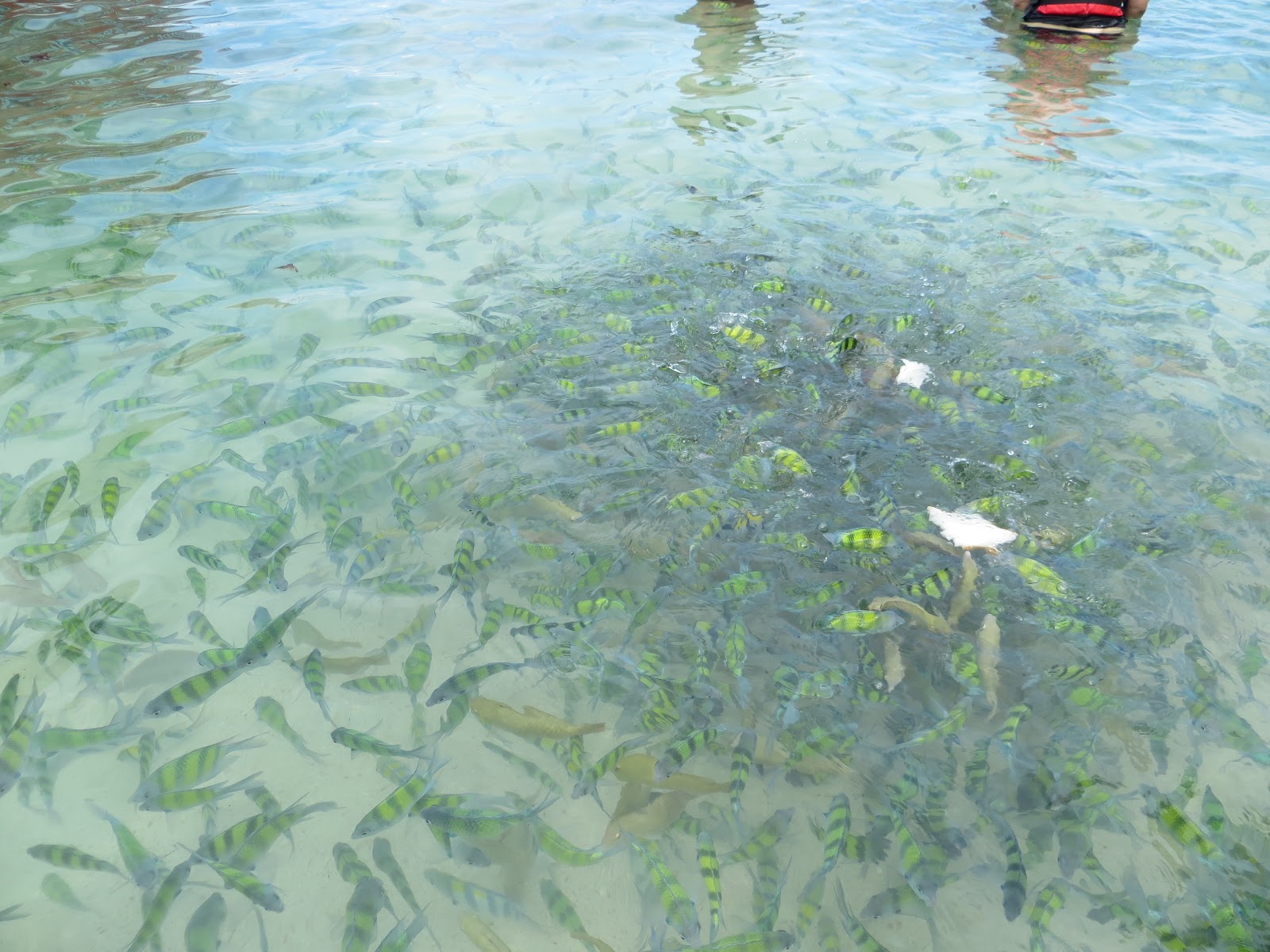
 Since Phuket is located in an archipelago of beautiful islands, they decided to do a day trip by boat that would bring them to the famous beaches of Kho Phi Phi and Maya beach (which is where the Leonardo di Caprio movie “The Beach” was shot). They were picked up at 7 AM (much to the disappointment of anyone who wanted to sleep in that weekend) and started their boat trip in the morning off the main harbor in Phuket. After a bumpy boat ride, they arrived at Maya beach. It is located in a beautiful bay, surrounded by steep hills, covered in green vegetation, white sand… It is really stunning – the problem is: When you are there, you are not the only one who thinks that. Actually, it is sooo overcrowded with speedboats that you barely see the beautiful beach and once the four travelers set their foot on the beach, they had to compete with about 1,400 other tourists for a few square meters of freedom or pictures with the scenery and WITHOUT the tourists. Well, that was quite a disappointment. But then, it was also understandable – the only way to have less tourists there is if the beach was going to be less accessible. Due to the proximity of a major tourist location, the “spill over” of these tourists seems somewhat natural. The four travelers then continued, passing another beautiful bay, the “monkey beach” with … surprise … many monkeys and then had lunch at Koh Phi Phi. Apparently, the island was once a secret tip among the backpacker community. Well, this was probably a long time ago but again, when the four had to share the beauty, it was apparent why. Moreover, they were very happy seeing that the coral reefs and the local fish population were largely intact. They went for a longer snorkeling trip and enjoyed the clear waters of the Andaman Sea. All in all, the boat trip was nice and they were glad that they went, despite all the other tourists…


We were not the only ones


Back in their calm beach town of Kamala, Jesús and Simon settled for some beers while the two Anas got manicures and pedicures. They spent an awesome time catching up, enjoying some drinks right at the beach and a dinner with the freshest seafood possible. Sunday, they finally had time just for some beachside relaxation. They all enjoyed massages, plunging in the sea, awesome food and then, Jesús and Simon even dared to some special activities: they connected to a parachute and a speed boat that would then pull them up. Thus, they managed to see the beauty of Phuket from about 50m on top of the ground. Awesome experience even though they did not have a camera with them to take pictures… 
Jesús being brave and going first


Simon taking off

As the reader can imagine, it is much nicer to experience a day of relaxation at the beach than to read about it.

All in all, the weekend was awesome, hanging out with good friends and enjoying yet another Asian travel destination. Ana and Simon quite enjoyed the company of their Spanish friends. For anyone interested, this may be your chance for the second half of 2013. Just connect with them and maybe, a future blog will be about you.

Many greetings from the Strait Settlement Singapura

Thursday, May 9, 2013

What it means to live in Singapore – Part 1


Short disclaimer: Due to many exams and quite a high workload, this blog hasn’t received the attention it deserves from Ana and Simon. If you, as reader of this blog, had to read boring stuff on the internet in the meantime, they truly apologize!

Singapore is a Fine City
So far, the blog entries have told the interested reader many stories of “special events” such as settling in, apartment hunting, new work / study environments or travel experiences. However, life is not every day THAT exciting. There are pretty uneventful days for Ana and Simon that consist mainly of working / studying, maybe joint dinner time and sleeping. Nobody would be interested reading that. On the other hand, everything happens in Singapore and the place is quite different to most other places in the world. It is a somewhat unique mixture of the skycrapers of a metropolis like New York, the order and structure of Switzerland, the population of East Asia and tropical climate that may as well be found in steaming Africa or Latin America. This blog will list a few interesting stories from this truly special place on earth.

Food & Drinks
Singapore is generally expensive. Ana and Simon specifically realized this during apartment hunting but also most other expenses are higher – about 30% over Munich prices. One of the few exceptions is food, or at least the basic version of it. Most neighborhoods have so called “Hawker Centers” which are basically food courts. They usually offer a great variety of different cuisines for a very affordable price of €4 to €8. What does different mean? Well, you can have Malay, Chinese, Vietnamese, Thai, Indian, Indonesian, Japanese, etc. Sounds all very much the same to you? Well, there is usually also one food stall serving “Western food” – everything from Schnitzel to Spaghetti and Fish & Chips. First, Ana and Simon thought that this was a bit random. However, they realized that there are also a number of places in Europe that sell “Chinese/Thai/Indian” food. It really depends of the perspective what variety means and which food you would maybe normally not mix together. That being said, Ana and Simon also have had very good experience at more upscale restaurants. Especially Ana was lucky to be invited to a few nice places with her colleagues and they feasted on Peking Duck and Asian Lobster.

One of the specialties of Singapore is the so-called “Chili Crab”. It actually also exists as a “Black Pepper Crab” and is basically a huge steamed crab served marinated in chili or black pepper. Knowing that Ana is not a great fan of spicy food, they were actually hoping that the black pepper crab would not be thaaat spicy. Well, proven wrong – the only one who mildly enjoyed it was Simon and they finally figured out that you could also order a crab without any sauce – it was not on the menu though.

In general, the different cuisines in South East Asia are all pretty spicy. Simon always thought that he had a high level of spice resistance. Turns out that when people at a restaurant tell him that the dish is “spicy”, it is already too much for Western taste buds. “A bit spicy” is very spicy, “just a little bit spicy” means it is spicy and if it is “not spicy at all”, chances are 50/50 that it is not spicy at all or only a bit spicy. If wanted, this information could be translated into a handy table to carry with you every time that you travel the region.

Obviously, eating out is not the only way to get food. Ana and Simon have their own “local” supermarket about 5 minutes from their apartment and enjoy the Chinese music coming from the speakerphones just as much as the interesting offerings in the shelves. Rice is – to no surprise – a big part of the diet and if you can find many sorts of potatoes in a well-equipped European supermarket, so can you find about 30 to 50 different sorts of rice in a local supermarket. 


Also, the variety of different tastes for Chips (Crisps) has been extended. If you thought that “Salt & Vinegar”, “Barbecue”, and “Red Pepper” is not enough, you were right. Come to Singapore and enjoy chips with “Kyushu Seaweed Flavor”!

Occasionally, especially Ana is missing the rich tastes of Spain. Both of them have tried a few Spanish tapas restaurants, some of them even with very decent food. Compared to the very affordable Hawker centers, the prices at these venues are pretty close to outrageously high though. So in order to bring some culture to their apartment, Ana and Simon also hosted some friends with good Spanish tapas and the obligatory Galician white wine that their friends Ana & Jesus had brought in March. The combination of "tapas and a view" was quite nice!


When it comes to drinks, Singapore is unfortunately again very expensive. The government taxes alcohol quite heavily so even in a super market, you cannot get a can of beer for much less than a Euro (in Germany, this starts at 25 Cents, if anybody was wondering). So when you go out, the cheapest (large) beer that you can get will cost around € 5 which is still ok. But this is at a hawker center. Tiger Beer is the beer of choice for most locals and can be purchased almost anywhere.

If one wants to get a “good German beer” (and many people in Singapore actually drink German wheat beer, probably because it is very refreshing in the heat), you should be thinking about €8 to €10. Sometimes, there is nothing better though! The best parts are when you can melt an Asian dinner experience with the German beer. Especially Simon is glad that this is possible!


Regulation
Singapore has the reputation for being one of the most dull and most heavily regulated places on earth. Ana and Simon thus went there, expecting it would be like Munich (which already has a high presence of police and many regulations) times 10. Little did they know. Well, actually, it is not that bad. There is for instance a popular myth: It is forbidden to possess or even consume chewing gum. While this had been true in the past and there is still no gum on sale in Singapore, one can import and consume it. Before Ana and Simon figured this out though, they just realized how bad they missed chewing gum.
On the other hand, many stereotypes about Singapore and its heavy stand on regulation are true. There are many signs that forbid the use / consumption of almost everything in certain public spaces, especially in the MRT (subway/metro): there is a 500 dollar fine for eating or drinking, 1,000 dollar fine for smoking and you also cannot bring Durians (the smelly tropical fruits that people here seem to love) into the MRT . There will be signs in the toilet what not to do (even though Ana and Simon thought that was pretty obvious) and even in night clubs. However, you do not have to obey everything.


Actually, Ana and Simon were surprised about the police presence. While there are often warnings in the metro “if you see any suspicious looking person or article, please inform our staff”, there is relative few police on the street – definitely less than in Munich. It seems that decades of law enforcement have done their deal and by today, it is not considered necessary for the police to be present everywhere.

On the other hand, even without police presence, there is “law enforcing” by the average citizen. One day, Ana and Simon went into the metro, having purchased a lollipop and having it in their mouth. Suddenly, they were approached by an employee of the MRT who reminded them that eating was prohibited on the MRT (subject to a $ 500 fine, see above) and that they needed to get rid of the lollipop. Excuse me? Well, they were basically chewing the rest of the lollipop in 30 seconds and thanked the employee for not enforcing the $ 500 fine.

The reader probably gets the message – it is somewhat ambiguous: People cross the street despite a red traffic light (probably more often than in Munich) but they in general do like the rules and obey them. But be assured, Singapore is less uptight than you may have thought.

There will be more insights on cultural specialties in Singapore such as language, going out, work ethics and administration – but this will follow and hopefully sooner than this update has reached the interested reader. 

Sunday, March 17, 2013

Asia for advanced travelers – Long weekend trip to Vietnam


Sorry for everyone who enjoys reading this blog that there hasn’t been an update for quite some time. As announced before, the first week of March brought the first round of exams for Simon at INSEAD and also Ana needed to tackle more of the exams in order to obtain her local licensing. Thus, the first week of March involved a lot of study time and in Simon’s case, it brought 5 exams within 55 hours – a combined 16 hours of exams. However, what usually happens if things are very condensed: Once they are over, you feel quickly very relieved. Thus, Simon hurried home, picked up two prepared carry-on suitcases, picked up Ana at her office and they took a cab to the airport. After having traveled just to the nearby areas of Singapore, they were awaiting the first real get-away trip to Vietnam. 

At this stage, they would like to share a super quick update on Vietnam, just for the uninformed reader to better understand this travel destination. If you are a Master of Vietnamese culture, you can skip this part J: Vietnam is probably know in the west primarily because of the Vietnam War. However, this proud Southeast-Asian country has a long history, more than 90 M inhabitants (having surpassed the German population around the year 2000) and it had a very strong economic growth in the past 15 years, relying on the Chinese development model. After the end of the Vietnam War, Vietnam was (re-)united under the victorious communists that implemented a rigorous one-party state, a dictatorship “Soviet Style”. 
 
When the Iron Curtain fell and most traditional trading partners of Vietnam disappeared, the Vietnamese political leadership thought that it may need to change the way it ruled the country in order to stay in power. Thus, similar to China, Vietnam opened up its market, liberalized its economy and fuel by low wages, industrious people and fertile land, it managed to gain an increasing share of international trade. Today, it is a capitalist one-party authoritarian rule that doesn’t have much to do with Communism other than the name of the ruling party. Having said that, the people of Vietnam are hungry to improve their economic well-being, they are motivated, friendly, many speak English (and French) and you can feel how the country is opening up. Ho Chi Minh City (the former Saigon, I will call it this way) is located in the South of Vietnam and as in many geographies, the people in the South are also considered to be the “more relaxed” people, being more open-minded and embracing the opportunities of the new economic freedom. Saigon has more than 7 Million inhabitants, having grown tremendously, and almost as many motorbikes / scooters. It is located about 100 km North of the Mekong Delta, the “rice bowl” of Vietnam where one of Asia’s largest rivers discharges in the South China Sea.

Well, now the interested reader knows almost everything that matters about Ana and Simon’s travel destination. Since it was the weekend of the break between two periods at INSEAD, they were not the only ones who had the idea to go on this trip – about 20 international students were on the same flight, more joining in Saigon on Thursday. After a short 2 hour flight, they arrived at the international airport and had to deal with the complicating immigration process. They needed to pay an additional USD 45 for their visa – quite ironic that one can pay almost everything in dollars while the Vietnamese tried almost everything to kick Americans out of Vietnam. But that’s another story. One of Simon’s classmates (Kim-Chi) is half-Vietnamese and had relatives in Saigon who greeted us at the airport. Kim-Chi’s aunt was very worried that the group would overpay because they were so many foreigners so she negotiated the taxi fare (which turned out to be only 1 USD per person on the “local” price) and then showed us a dinner place on a local night market where the odd-collection of individuals from all around the world were quite an attraction. Vietnamese food is super amazing – very fresh, with a lot of vegetables and highly recommendable. 
 
The first full day, a group of about 16 people did a city tour of Saigon in the morning. Saigon is the largest city in Vietnam and was the former administrative center of French colonial rule (they were there until 1954) and thus, they left a few impressive buildings. Ana, Simon and the gang started at the “Notre-Dame Cathedral”, visited the belle-epoque style post office (with the ubiquitous picture of Ho Chi Minh or as he is called by the Vietnamese: Uncle Ho) and took a tour of the “reunification palace”. This building was the seat of the South Vietnamese president and the picture of a North Vietnamese tank passing through the gate in 1975 is one of these pictures that made world history. Afterwards, they went to a museum that remembered the war and all the cruel things that happened in Vietnam. Pretty shocking (as with any war museum) but it also had a bunch of old American equipment – amazing what the US shipped over here to fight a war. 
Notre Dame Cathedral

Independence Palace

American Tank

American fighter plane
Afterwards, they went to have lunch to a typical Vietnamese restaurant and enjoyed some delicious “Bún bò Huế” – the Vietnamese beef soup with long rice noodles (vermicelli) and a number of fresh vegetables. This is sooo delicious, Simon ate it 4 times in three days! It was also fun to eat with chop sticks and a spoon. 


After lunch, Ana and Simon and the group took a bus to the Cu Chi Tunnels. This is an area that was controlled by the Vietcong (the communist South Vietnamese supporters of the North during the Vietnam war). As they were operating in the hinterland of Saigon (just some 50 km away), they were in constant fear of American searches and thus created a network of tunnels that allowed them to move great distances undiscovered and sometimes even live their for days. It was very impressive to see the small openings in which the Vietnamese managed to escape. Also, it reminded us that the Vietnam war is not that long ago and it has left some large scars in the landscape. If you are interested to read more about it, check out the Wikipedia article (http://en.wikipedia.org/wiki/Cu_Chi_Tunnels).
The first and only "Viet Cong" with blue eyes


Upon return, some people decided to take a nap but Ana and Simon went to a massage place to get their tight muscles relaxed. One hour for 10 USD. Nothing wrong with that! For dinner, they met the rest of the INSEAD students and partners and went to a restaurant where they ended up taking over the largest eating room. So much fun, again delicious food and a crowd of 30 young and international people. Afterwards, they went out to go clubbing in Saigon and enjoyed partying for the first time in a while. 
Dinner with 30 people from >10 countries
On Friday, after two awesome days with a fun crew, Ana and Simon started their expedition to the Mekong Delta to have some quality time for themselves. A minibus came to pick them up and drove them out of Saigon. After 2 ½ hours, they arrived at a small town in the Mekong Delta from where they took a boat to the lodge. After the time in buzzling Saigon, they enjoyed the peaceful environment at the Mekong Lodge. It had it all: An absolutely unique setting along the banks of the Mekong River, a sustainable business model (employing locals from nearby villages and sourcing all food locally), very well-taken care off bungalows, interesting excursions and superb food. It really reminded them of a Garden Eden and was a perfect retreat. They also did bike and boat tours of the surrounding areas, including some market visits and local fruit tasting. Ana and Simon also managed to catch up on their sleep, well desired after exams and a tough working work. 
On our way to the Mekong Lodge
Our little private pool
Sunset over the Mekong River
Floating market

Our bungalow viewed from the Mekong River
The land market


Bye bye Mekong Delta


From the Mekong Lodge, they got back to the airport and flew directly to Singapore. What an awesome change of scenery. It clearly made them keen for experiencing more in the region. The next trips are booked already. But more to come!

Many greetings and best regards from the former British Crown Colony in Southeast Asia.
Ana and Simon

Thursday, February 28, 2013

Traveling 101

The major reasons for Ana and Simon’s move to Singapore have been laid out in the blog so far: Ana’s job experience in Asia and Simon pursuing his MBA. Moreover, to get a feeling for the culture here in South East Asia, they had the opportunity to experience Chinese New Year’s celebration and obviously, there is also some day-to-day experiences that are just very different than life in Europe (more on that in a later blog). One other advantage of being here in Southeast Asia is also that Singapore is a hub for the region and therefore traveling is made rather easy. Being a city state, Singapore is also so small which means that once you leave Singapore Island, you are already in another country. Since Ana and Simon will be here for the full year, they do not need to rush things (some of the INSEAD students seem to travel every weekend but they are only here for four months) and took their traveling plans easy: First, settling in, getting accustomed to culture and working / studying etc. However, they did leave the Singapore twice already.

One little getaway trip was on the third weekend in Singapore. About 35 INSEAD students had decided to go to Batam, an Indonesian island off the coast of Singapore, and Ana and Simon went with the crowd. Simon had classes on Saturday until 1PM and Ana came to pick him up. The total group had organized to stay in a down-to-earth resort which had large houses that would host 6 to 8 people. Ana and Simon’s travel group for the transfer and for the night therefore consisted of six other fellow students: Two guys (American and Indian) and four girls (Korean, Bulgarian, Russian and Lebanese). Talking about international student body! With the Spanish explorer and her German husband, there were eight nationalities in one house :-)
The international crowd on a speed ferry to Batam
Unfortunately, they had picked a weekend that would be rainy. And rainy, in Singapore and around means LOTS OF RAIN. They managed to get an early ferry but the boat ride was quite bumpy due to the weather conditions. They immigrated to Indonesia (which “costs” one and a half pages in the passport!) and transferred to their resort. With the weather being rainy, there was unfortunately not much to do. Going to a supermarket to buy “supplies” for the evening was already a big event. While Batam is probably a better developed part of Indonesia (it enjoys the benefits of forming a free-trade zone with Singapore), the differences that Ana and Simon could observe on their way around the island were quite significant. Nevertheless, the Indonesians were super friendly and rather liberal (being a muslim country, buying alcohol in the supermarket was not a problem!). 


The evening was lots of fun with eating in the hotel and drinking / partying and talking around the pool. The hopes were high that the weather would be better the next day since it didn’t rain at night but the hopes were crushed when breakfast was overshadowed by more rain. Well, they left Indonesia less than 24 hours after arrival so they will not claim that they’ve “seen it all”. But it was a good first getaway, lots of fun with an international crowd and a trip that provided them with new stamps in their passports. 
The INSEAD bag also works well to transport beer

Let's (pool)party!


The first real chance for a longer get-away was the Chinese New Year (CNY) weekend. This time of year, about everybody is traveling and therefore, flight prices were very expensive. Ana and Simon didn’t feel like paying more than 300 EUR per person for a flight so they considered alternatives. Also, staying here for a year, they didn’t have the “pressure” of seeing the coolest places immediately. After doing some research, they decided to give the other neighboring country of Singapore a chance: Malaysia. There are affordable bus rates to go to Kuala Lumpur and the highway between Singapore and Kuala Lumpur is quite well in shape. The advertised travel time was about 5 hours, even though it took the bus longer to cross the border and due to CNY, there was also a lot of traffic. However, it was quite nice to see the landscape of the tropical Malaysian peninsula and the bus was very comfortable (even though a bit too much cooled down by the AC). 
First view of the KL Tower


Ana and Simon left on Saturday morning and arrived in Kuala Lumpur in the late afternoon. The first impression of Kuala Lumpur (or KL as it is commonly called) was not much different from Singapore: Huge sky-rise buildings, air-conditioned malls and modern public transport. Still benefiting from Simon’s work project in the Middle East in 2010, they spent two nights at a Sheraton Hotel, with a great view of the KL Tower, one of the largest TV towers in the world. From there, they went to Chinatown for a dinner and a first exploration. In Chinatown, they saw a few differences between KL and Singapore. Things were a lot less organized and a bit dirty, including a rat strolling by a restaurant where they just had a beer and skipped the food. Ana was a bit uncomfortable since she was wearing a pretty dress and felt that she needed some “explorer” equipment. She had already purchased some khaki pants in Singapore and she completed her outfit with explorer shoes in KL. So Ana and Simon were ready for the next day. 

Sunday, they went to a place outside of KL, the Batu Caves which has a series of caves and cave temples. The cave is one of the most popular Hindu shrines outside India, dedicated to Lord Murugan which is a popular Hindu deity among Tamil Hindus, and is worshiped primarily in areas with Tamil influences (Tamils are from Southern India and Sri Lanka). Well, this is obvious much different than what they know from Western Europe or North America so it was quite interesting. They went up 272 steep steps to enter the caves, with a number of altars, religious figures and monkeys (yes, real monkeys). Obviously, there were many worshipers from India and this was a totally new experience for them. Some pictures can give the reader an idea of it. 
Ana (with her explorer pants) and Simon

The inside of the Batu Caves

Steep steps


After exploring these caves, Ana and Simon went back to downtown KL with a very friendly taxi driver (who even spoke some Spanish!). He dropped them near the Petronas Towers, the landmark of Kuala Lumpur. From their completion in 1998 to 2004, the towers were the tallest building in the world and an iconic structure, representing the rise of Southeast Asia to many. There was a nice park around the building and since it was super hot and humid, Ana and Simon were also happy to find an air-conditioned mall that was open as well. In order to see most of the city, they took a “hop-on-hop-off” tour of KL and learned much more about the Malaysian capital. Without getting too much into detail here, the major points of interests is that KL was founded relatively short while ago (in the 1850s) and soon became the most important city on the Malaysian peninsula. The British, who ruled the region until 1957 erected a number of impressive colonial buildings and left their cultural mark: The major square of KL was actually a cricket square. Obviously, the Malaysians wanted to change that and independence was declared on the cricket field, transforming it to Merdeka Square (Independence Square). Well, a few pictures of the city tour are attached. 
Simon and Ana with the Petronas Towers

Ana holding the flagpole

The Malaysian answer to Big Ben (or so the tour guide said)


Finally, Ana and Simon enjoyed their highest dinner ever at the revolving restaurant in the KL Tower. At 282 meters above the ground, they enjoyed not only a very rich buffet but also awesome views of the city, including the Petronas Towers. The funny thing is that while the Petronas Towers are so tall, the visitors platform is actually 100 meters lower than the KL Tower. So the vista enjoyed from there was definitely more impressive. 


The next day, Ana and Simon would already go back after a relaxing breakfast. So traveling 101 was passed successfully with the two small trips to the vicinity of Singapore. Now, they are ready for more. Next trips will be to the South of Vietnam (Ho Chi Minh City / Saigon and around) as well as a weekend in Phuket / Thailand. This will for sure be captured in a future blog entry. So far, this is it from Southeast Asia.
Many hugs from Southeast Asia’s melting pot
Ana and Simon